Knowledge hub and professional association
2011.
Structured coaching development at an international level.
We coordinate an international network of ontological coaches across 26 countries.
IACM operates not as a training provider, but as a professional body. Our work includes developing standards, certification, coordinating training, advancing knowledge, promoting ontological coaching, and representing professional interests.
Coaches from
26
countries
Established in
2011.
15,000
ontological coaches worldwide
The Meeting of the Creative Class:
The International Professional Center and Association of Ontology-Based Coaches and Mediators
Scientific rigor, premium-quality training and continuing professional development, clearly defined professional standards, global accreditation, and an international professional network for qualified practitioners.
Integrated Coaching Ecosystem,
the best place to belong.
We provide a unique global platform for professionals who constitute the intellectual capital of the modern economy. Through an internationally validated certification system, rigorous ethical and professional standards, and direct pathways to global market entry, we support our members in establishing and advancing their professional presence anywhere in the world.
The pursuit of constancy is the primary engine of change.
The core mission of the IACM Network is to foster profound and sustainable development in both individual and organizational operating models by moving beyond superficial symptom management and temporary solutions. Through transformative coaching, we advocate for a radical shift in perspective that goes beyond simple crisis management and provides essential tools for unlocking inner potential and designing the future.
Scientific rigor: we replace subjective opinions with proven correlations, where the synthesis of millennia-old philosophical traditions and modern cognitive research ensures the measurability and professional credibility of our methodology.
Practical Toolkit Our members gain exclusive access to the network’s internal database, featuring immediately applicable case studies, contract templates, and methodological guidelines to support their daily practice.
International Accreditation We certify your expertise based on a transparent and rigorous requirement system. We validate your professional readiness across three distinct levels, recognized in 140 countries worldwide.
Global Connection We provide direct access to the world’s largest professional community, where you can find partners for international projects or access expert peer support and supervision.
Best top notch features we provide to you

Online Certifications

Qualified Instructors

Unlimited Categories

Experienced Members

15.000+
Ontological Coach



15 Years
Of Experience
A professional home for conscious development Do not just follow trends – be part of shaping the methodology. Our membership opens doors to the world’s most respected ontological professionals, exclusive research materials, and a supportive network that guides your every step on the path to mastery.
Scientific Rigor: We build upon thousands of years of philosophical tradition. Our multidisciplinary approach is anchored in the latest research and professional advancements in neuroscience (biology), sociology, cognitive sciences (such as cognitive linguistics), and modern management sciences (including decision theory and management). We offer a toolkit and a mindset that enable the profound transformation of both personal and organizational operations. With us, professional work is based not on beliefs, but on proven correlations and high-quality professional experience.
Global Accreditation and Prestige: We provide an internationally validated certification system that verifies your professional readiness in 140 countries worldwide. An IACM accreditation is not just a diploma on the wall; it is a gateway to the corporate sector and international consulting projects, where the presence of global standards is a fundamental expectation from clients.
Genuine Market Networking: Our members become part of a living, global network. This community provides direct access to the world’s leading professionals, generates cross-border collaborative projects, and delivers social capital that translates immediately into a competitive business advantage. At IACM, professional development and market growth go hand in hand.
Why join the IACM Network?
Scientific Rigor, International Prestige, and Market Advantage
In a saturated consulting market, clients no longer seek mere solutions; they demand evidence, real quality assurance and proven credibility. The IACM Network was established to transform professional integrity into a global currency for its members. We do not offer just another methodology or membership; we provide a professional ecosystem that anchors your success on the following three fundamentals:
 Scientific Rigor
Global Accreditation and Prestige
Genuine Market Networking
+
Accredited Training Programs
Ethical Guidelines
+
Research Center
Events and Conferences
Valid Certifications
Video learn platform
Courses guidelines

Call us now :
+353 (89) 400 7116

Get in touch :
contact@iacmnetwork.uk
5.2K+
Students Enrolled
68+
Class Completed
100%
Satisfaction Rate
15K+
Ontological coach
Become a Certified Coach
Elevate your professional journey by earning a globally recognized credential that merges rigorous scientific standards with transformative impact.
Master the art and science of coaching through our accredited programs and join an elite international community of practitioners dedicated to excellence.
Transform your career and secure your place among the world’s most respected professionals as a certified ambassador of conscious change.
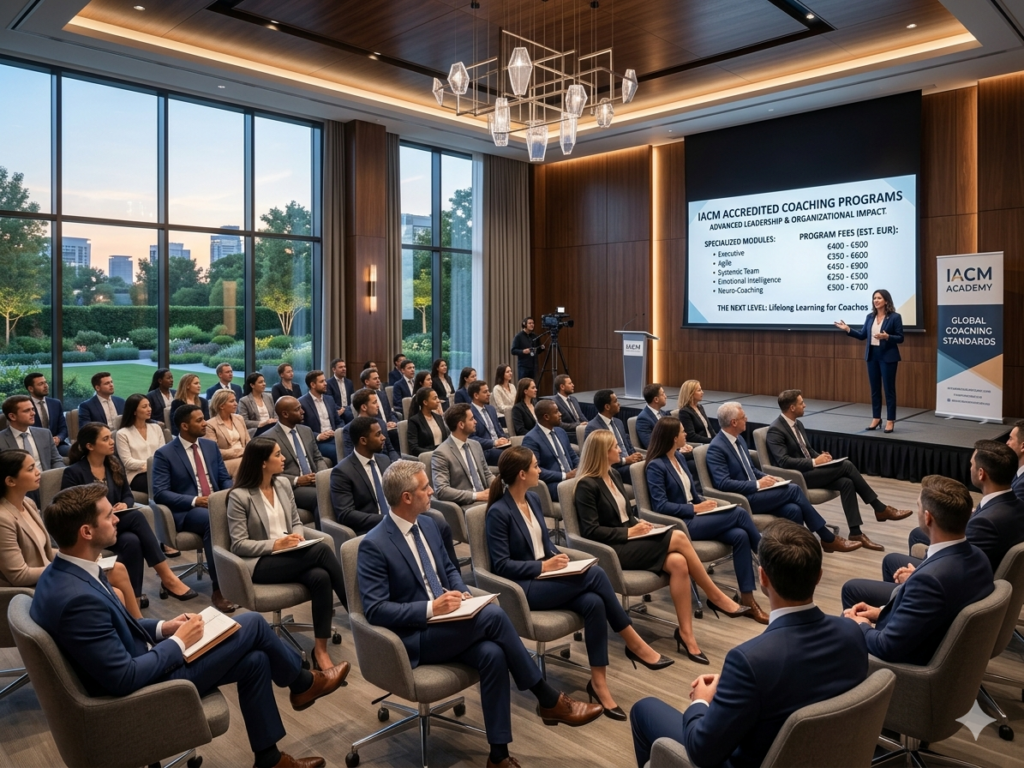
Programs are selected based on methodological consistency, practical applicability, and alignment with IACM standards.
Selection criteria
– methodological consistency
– clarity of structure
– applicability in real coaching practice
– alignment with IACM standards
All programs listed here are reviewed and aligned with IACM professional standards.
These programs are aligned with IACM professional standards and reflect the methodological foundations of ontological coaching within our network.
They are not listed as general courses, but as structured learning pathways that meet defined criteria in methodology, application, and professional development.
Recommended and Accredited Programs.
The cornerstone of credibility
How can we expect change and growth from our clients if we remain stuck within our own mental frameworks? For a coach, continuous learning is the bedrock of personal integrity: we must embody the very principles we teach.
The Evolution of Excellence
True mastery begins where the textbook ends. It is the transition from simply practicing a profession to embodying a discipline. By integrating scientific depth with your unique coaching presence, you no longer just facilitate conversations, instead you create a laboratory for human potential.
Amplify your impact
Where scientific depth meets professional mastery Don’t just adapt to change, become its architect. Harness profound methodological insights, stay ahead with the latest coaching trends, and refine your practice with mindset-shifting leadership wisdom designed to spark breakthroughs for your clients and your career alike.

LIFE & MANAGEMENT
Fees :
€1.225
AI-assisted coaching training (coaching course)
By Andrew Parker
 (4.8 ratings)
LIFE
Fees :
€410
DeepDive Lab: Where genuine breakthroughs are born (coaching training)
By Alison White
(4.5 ratings)
LIFE
Fees :
€520
Zenith Academy: Peak performance in coaching (training)
By George Hobbs
(4.7 ratings)

LIFE
Fees :
€690
Stress Management and Resilience
By Michael Johnson
(4.91 ratings)
MANAGEMENT
Fees :
€1.110
Emotional Intelligence (EQ) Development
By Daniel Taylor
(4.55 ratings)

BUSINESS
Fees :
€950
Positive Psychology in Practice
By David Brown
(4.85 ratings)
POPULAR COURSES
Lifelong Learning: Growth is not a destination, but a way of life.
In the world of coaching, updating your knowledge is not merely an opportunity but a fundamental prerequisite for professional excellence Whether you are deepening your foundations or striving for mastery, continuous learning is what keeps your professional credibility in motion

MANAGEMENT
Fees :
€799
Evidence-Based Excellence: Science-backed methods for lasting impact
By Emily Wilson
(4.99 ratings)
MANAGEMENT
Fees :
€1.410
Neuro-Navigator: Understand the mind, lead the change (coaching course)
By Daniel Taylor
(4.5 ratings)

BUSINESS
Fees :
€850
The Voice of Credibility: Find and strengthen your coaching identity
By Charlotte Davies
(4.8 ratings)
5,200+
Happy students have already joined our courses
International Association of Coaching and Mediation (IACM) – The Global Knowledge Network & Professional Community of Ontological Coaches
“Your growth is the ceiling of your client’s potential.
Break through yours, so they can transcend theirs.”
The International Association of Coaching and Mediation was established as a global center for professional discourse grounded in ontological foundations, operating as a professional network and knowledge hub with the explicit aim of addressing systemic deficiencies present in the fields of coaching and mediation.
It functions within a framework specifically aligned with the complex challenges of the 21st-century information society, built upon interdisciplinary scientific foundations, and supported by AI-based software tools that enhance decision-making and analytical processes, while consciously serving as a bridge between scientific research, professional practice, and the world of end users.
The creation of this professional network was driven by the recognition that the vast majority of training programs and accreditation systems available on the market focus almost exclusively on the transmission of technical repertoires and immediately applicable techniques. In doing so, they tend to neglect the coherent and rigorously constructed scientific and intellectual framework that constitutes the true foundation of effective practice. Established schools of thought and prevailing market models fail to give sufficient attention to the critical moment in which the practitioner accurately grasps the deep structure of a situation, identifies the relevant points of intervention, and assesses the long-term implications of the chosen course of action.
The objective of the knowledge center is not to introduce yet another fashionable methodology, but to systematically organize the underlying cognitive mechanisms that drive helping processes. This approach enables professionals to move beyond intuitive or instinctive judgments and to ground their work in a scientifically informed, experience-based, logically substantiated, and internally consistent system.
At the core of this framework lie three fundamental questions that render every phase of the developmental process transparent: the diagnosis of events unfolding within the interaction, the rational justifiability of professional decisions, and the direction of the dynamics generated by the intervention. Through this lens, coaching and mediation cease to function as mere technical toolkits and instead transform into a rigorously defensible, high-level interpretive practice. For this reason, the IACM provides meaningful support to those professionals who do not seek to expand their methodological “toolbox” in quantitative terms, but rather recognize mastery in precise situational assessment and in making responsible, well-founded decisions.
IACM – The coaching ecosystem, the meeting point of the most intelligent coaches
What is ontological coaching?
Ontological coaching is a structured approach to understanding how people interpret situations, make decisions, and act. It focuses on the underlying patterns that shape outcomes, not just surface-level problems.
What do we do in practice as ontological coaches?
We work with how people construct meaning in complex situations and how this influences their choices and actions. The focus is not on solving isolated problems, but on identifying the structures that repeatedly produce the same outcomes.
The result is a change in how decisions are made, not just what is decided.
We work with how people make decisions, interpret situations, and act under pressure. Our coaching is based on structured analysis, not advice or motivation.
In a session, we identify the patterns behind repeated outcomes.
In practice, this means mapping how a person defines a situation, what distinctions they use, and how these shape their available options. By making these structures visible and adjustable, we expand the range of possible actions.
This includes how a client interprets a situation, what options they see, and how they choose between them. We then test and adjust these patterns in real scenarios.
For example, a client struggling with indecision is not given strategies. Instead, we analyze how they define the situation, what criteria they use, and where the decision process breaks down.
The result is not advice or guidance, but a shift in how situations are understood and navigated, leading to more consistent and effective decisions across contexts.
What do we do in practice as a professional association of ontological coaches?
Together, these functions define IACM as a professional association responsible for methodology, standards, accreditation, knowledge development, and international professional coordination.







The activities of the International Association of Coaching and Mediation (IACM) are based on a complex and structured professional system aimed at the development, application, and international standardization of ontological coaching. The central focus of the organization is the systematization of ontological coaching methodology, as well as the development of professional decision-making models and procedures that enable deep structural analysis of situations, the identification of relevant intervention points, and the anticipation of the consequences of decisions.
An integral part of IACM’s operations is the development and application of AI-supported coaching tools, including diagnostic software, structured assessment tools, analytical systems, and coaching guidelines. These tools are designed to support professional decision-making, increase analytical accuracy, and facilitate the structured interpretation of complex interactions.
The organization applies an interdisciplinary approach, integrating insights from multiple scientific domains, including systems theory, behavioral science, and linguistic analysis, into coaching and mediation practice. In parallel, IACM actively builds and develops its international professional network, based on collaboration among professionals from different countries.
Another key area of IACM’s activity is the development of high-quality educational programs, as well as the structured management of training and continuing education. The organization also establishes accreditation standards and conducts full accreditation procedures, ensuring the maintenance of professional quality and consistency across the network.
The objective of IACM is to operate a global professional ecosystem that defines ontological coaching not as a technical toolkit, but as a structured, analysis-based, and scientifically grounded decision-making practice.
University research background
University of Oxford — Prof. Ian Horrocks, PhD — semantic web, formal ontology, knowledge representation
University at Buffalo (SUNY) — Prof. Barry Smith, PhD — founder of Basic Formal Ontology (BFO), applied ontology
Princeton University — Prof. Elizabeth Spelke, PhD — cognitive development, core knowledge systems
Harvard University — Prof. Daniel Gilbert, PhD — psychology of decision-making and human judgment
Columbia University — Prof. Adam Galinsky, PhD — leadership, social cognition, organizational behavior
University of Twente — Prof. Nicola Guarino, PhD — foundational ontology, conceptual modeling
Applied Ontology Research Group, KPV Faculty
University of Pécs, Hungary — Dr. József Kollár, PhD — philosopher, university lecturer, aesthete, poet, and master coach
“The secret to ontological mastery: beginning every day as a student.”
Best top notch features we provide to you
Year of establishment: 2011.
Coaches from
26 countries
Knowledge hubs and workshops
15,000 coaches worldwide
How the association operates?
The association works through national chapters led by designated professionals.
Each chapter is responsible for local activity while operating within a shared international framework.
We are proud of our members and chapter leaders, who work at an outstanding professional level in their respective countries. Their work strengthens local communities while continuously elevating the quality of international collaboration.
The strength of the network lies in the experienced and committed professionals who build it every day. Chapter leaders and members together represent the level of professionalism and mindset on which IACM is founded.
Join us if it matters to you to be part of an intellectually and professionally prepared, high-level community, and to contribute meaningfully to our shared professional achievements. In return, we provide a strong professional reference and an internationally connected platform for your work.

International Chapter Leaders and Members
Carlos Pinto
Coach
Portugal
Michael McCoy
Coach
Japan
Raja Yousif Al-laho
Mashar for Coaching and Training
Executive & mentor Coach
Kuwait
Ingolfur Thor Thomason
Coach
Iceland
Jan Hruška, MSc.
Senior business coach, managing partner
Czech Republic
Robert Christopher Brain
Coaching Services
South Africa
Dilek Yıldırım Akgün
Executive & Team Coach
Turkey
Costel Coravu
ARL Team Coach, ICA Learning Leader
Harmony & Business Coach
Rumania
Dr. Jane Cox
Keynote Speaker | Workshop Leader | Facilitator | on People, Culture, Communications and Strategy
England
Ivan Traina
University of Bologna, Department of Education Studies
Italy
Sukh Mishra
Peer Coaching
India
Dr. Peter Reynders
Coach
Germany
Anat Naveh
Life Coach, Trainer
Israel
Plamen Petrov
Leadership & Strategy Coach
Bulgaria
Andrea Palanova
Coach
Czech Republic
Susan Grace C Rivera
Managing Consultant & W.E.L.L. Coach
Talent, Leadership & Change Consulting
Philippines
Adam Wojtovic
Managing Partner & Coach
Czech Republic
Prasad Abaji Deshpande
Director, coach
India
Tatu Tudor
Jurist, mediator
Chairman of the Union Banking Mediation of Romania
Rumania
Emese Papp
Coach
Serbia
Your most valuable investment is the lens through which you interpret reality.
The international presence is operational, not symbolic. Each country functions as an active node within the network, with defined roles, communication channels, and reporting structures. This ensures that professional standards, certification criteria, and methodological principles are applied consistently across all locations, while allowing adaptation to local professional and cultural contexts.
Membership is selective and based on demonstrated competence, commitment, and alignment with our professional standards. We work with people who take responsibility for their development and contribute actively to the quality of the field.
IACM membership and international presence
IACM operates as an international professional network currently present in 26 countries through locally coordinated chapters. Each country is represented by a designated chapter leader responsible for maintaining professional standards, coordinating members, and connecting local activity to the global framework.
IACM Membership Structure:
- Global network (central methodology and standards)
- National chapters (country-level presence)
- Chapter leaders (local coordination and quality control)
- Members (certified or in training professionals)
Core functions of chapter leaders:
- represent IACM standards locally
- organize professional activities (training, supervision, events)
- support member development
- ensure alignment with global methodology
In a given country, the chapter leader coordinates local coaches, organizes training cohorts, and ensures that certification processes follow IACM standards. Members participate in training, supervision, and practice under this structure, while remaining connected to the international network.
IACM Membership, Head of department (Country)
PhD Dr József Kollár
Philosopher, Master coach
Wikipédia
Hungary
PhD Dr Mahesh Deshmukh
Coach
India
Larisa Kim Лариса Андреевна Ким
Coach
Kyrgystan
Gérard Desmaison
Finance, HR, purchasing, production, general management, extensive international experience, support for managers and project teacher University of Lyon
France
Gaëlle Coqueblin
Coach
Mauritius
Gulnara Meshitbayeva Abdumannapovna
Coach
Kazakhstan
Eike Tõnismäe
Coach, Trainer, Mentor
Estonia
Prasad Abaji Deshpande
Director, coach
India
Veronica Margaret Wantenaar
Coach
South Africa
Gergana Pavlova
Co-Active Leadership Coach & Facilitator
Equinox Partners
Bulgaria
PhD Dr. Peter Benkovic
Coach
Slovak Republic
Dr. Timea Madar
Coach, psichologist
Rumania
Ioannis Hourdakis
Coach
Greece
Ashok Narain
Executive Coach and Leadership Skills Trainer
India
Gennagyij Sverdlov Свердлов Геннадий
General director Coaching and concalting center
Russia
Susanna de Los Reyes Lopez
Coach
Spain
What we do as an association?
We build and maintain a structured international network of ontological coaches.
Our focus is on professional consistency, methodological clarity, and the development of a shared standard across countries.
How we operate?
The association works through national chapters led by experienced professionals.
Each chapter carries out training, supervision, and professional activity locally, while remaining aligned with a common framework.
What we are responsible for?
We define and maintain the professional standards of ontological coaching within our network.
This includes certification processes, methodological development, and the continuous evaluation of coaching practice.
IACM Ontological Model
Language → how situations are interpreted
Emotion → how action becomes possible or blocked
Body → how patterns are embodied and stabilized
Action → observable behavior and decisios
Call us now :
+353 (89) 400 7116
Get in touch :
contact@iacmnetwork.uk
15.000+
Ontological Coach
15 Years
Of Experience
What is ontological coaching?
Ontological coaching is a structured developmental process that focuses on how a person’s thinking, language, emotions, and behavior patterns shape their reality and decisions. In the IACM framework, the goal is not problem-solving alone, but the transformation of the underlying structure that produces recurring outcomes. It operates at the level of identity, perception, and meaning-making.
A client repeatedly avoids leadership roles. Traditional coaching addresses skills. Ontological coaching examines the language (“I am not a leader”), emotional pattern (anxiety), and behavioral loop (withdrawal). By restructuring interpretation and response, the client begins to act differently without external pressure.
Our results are reflected in the professionals we develop and the standards we maintain. Across our network, members deliver measurable impact in coaching, leadership, and decision-making contexts, applying a consistent methodology in diverse environments.
Our growth across 26 countries, the strength of our chapter leadership, and the outcomes achieved by our members demonstrate the effectiveness of our approach in practice.
Join us — we welcome you among us!
According to Richard Florida, in the 21. century, a new class is organized: the Creative Class. The knowledge-based economy is driven by a special subset of human resources, precisely this creative class. According to the new growth theory, the economy is driven not by the production of goods but by the production of ideas. It is not the products that can be produced by ideas, but the ability of people to produce ideas themselves that is becoming an increasingly valued and sought-after economic value, a real factor of production.
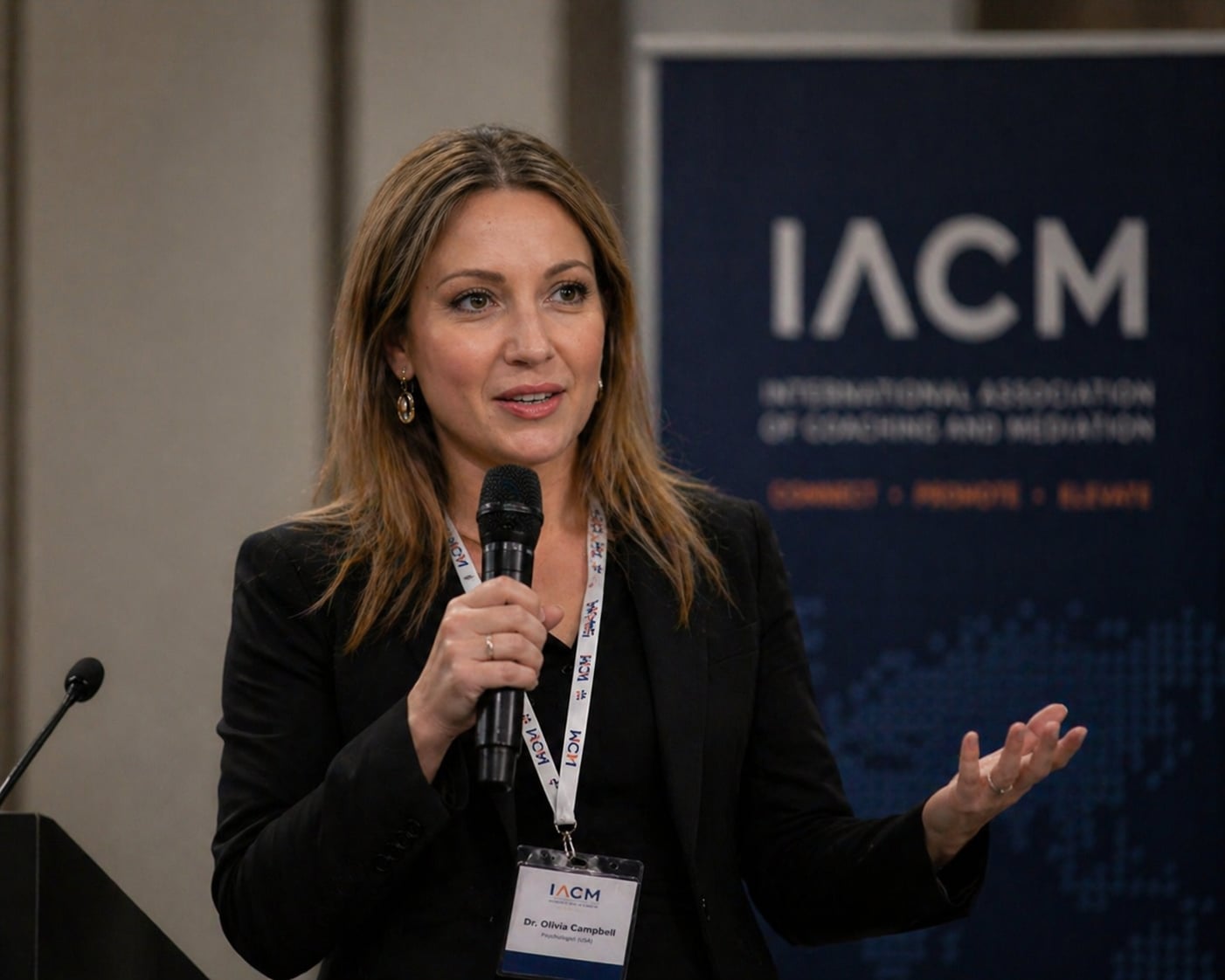
A friendly greeting from Olivia Campbell, President of IACM
Dear Colleagues!
„Coaching is not just a profession but a calling that serves growth, transformation, and the strengthening of connections. I believe that with every coaching session, we have the opportunity to make the world a slightly better place. I encourage you to always strive for empathy, curiosity, and integrity in your work.
Unlocking human potential creates tremendous value not only for individuals but also for our communities and society as a whole. Together, as coaches, let us shape a future filled with possibilities and hope.”

Olivia Campbell is an internationally renowned psychologist, coach, and leader who currently serves as the President of the International Association for Coaching and Mediation (IACM). Throughout her career, she has played a pivotal role in advancing and elevating the field of human consultancy, which balances the intersections of coaching, mediation, human profiling, and psychology.
Her primary areas of interest include leadership development, organizational decision-making, and self-efficacy. Through her inspiring and innovative leadership, the IACM has become a globally influential professional organization.
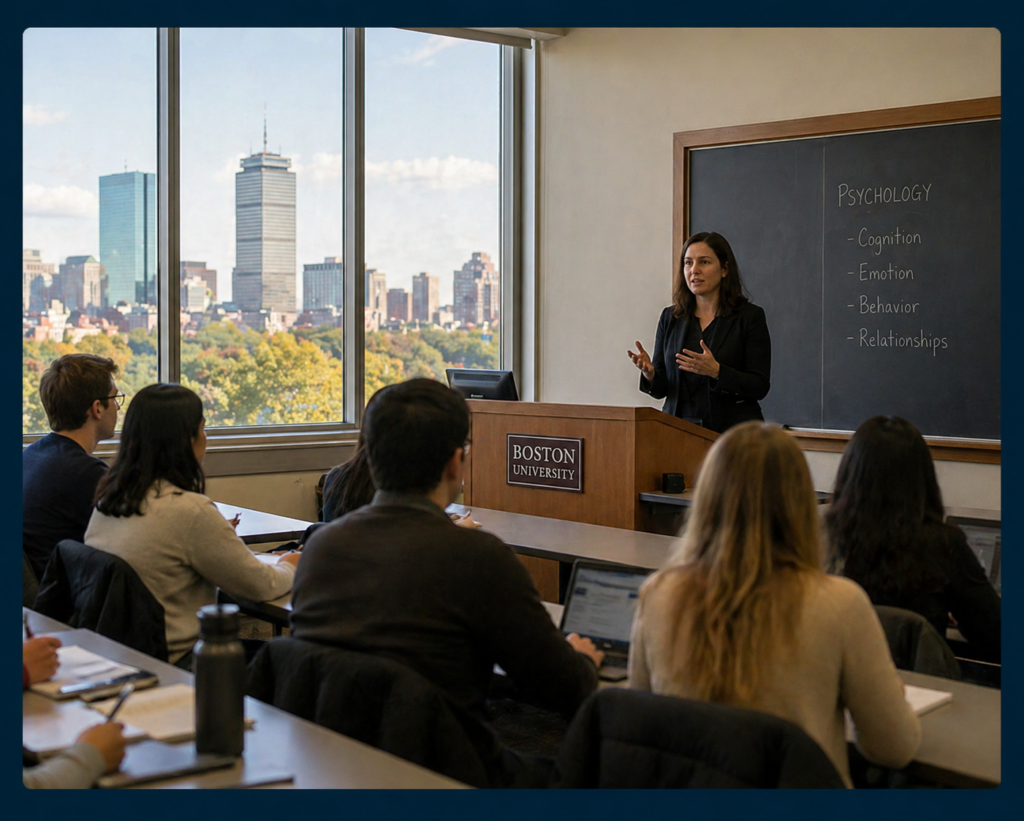
Olivia was born in 1981 in Boston into an academically inclined family. Her father was a university professor of philosophy, while her mother was a clinical psychologist.
Her childhood was shaped by a deep intellectual curiosity and a profound interest in people. From an early age, Olivia knew she wanted to pursue psychology and was always fascinated by understanding the dynamics of human relationships.
She complemented her psychology undergraduate studies with coursework at several universities. Her research focused on the relationship between emotional intelligence and leadership effectiveness, a subject that later became a cornerstone of her career.
RECENT INSIGHTS
Check out our news and
featured blog posts
Partners
The IACM Network (International Association of Coaching and Mediation) operates as a professional body that develops methodology, accreditation standards, and a global network for ontological coaches and mediators. It does not function as a traditional training provider but as a system that defines, evaluates, and supports professional practice.
In practice, IACM designs decision-making models, coaching frameworks, and analytical tools that help professionals understand and intervene in complex situations. Its work includes developing certification systems, coordinating international collaboration, integrating interdisciplinary research, and providing practical toolkits such as case studies, protocols, and diagnostic methods.
The organization also supports real-world application by connecting members to international projects, maintaining ethical and professional standards, and offering a structured ecosystem where coaching is treated as a scientifically grounded, analysis-based discipline rather than a set of techniques.
IACM (International Association of Coaching and Mediation) differs from organizations such as ICF, EMCC, or AC in its structural focus and methodology. While those organizations primarily define coaching competencies, ethical standards, and credentialing pathways based on training hours and supervision, IACM operates as an integrated system combining accreditation, applied methodology, and decision-making frameworks.
IACM places stronger emphasis on analytical models, measurable outcomes, and interdisciplinary foundations, including cognitive science and decision theory. Its accreditation is designed to validate how professionals operate in complex, real-world situations rather than focusing mainly on completed training processes.
Another key difference is that IACM integrates coaching and mediation into a unified framework, treating them as interconnected tools for intervention in organizational and interpersonal systems. This positions it closer to a methodology-driven professional system, whereas other organizations function primarily as standard-setting and credentialing bodies for coaching practice.
IACM certification can be worth it for becoming a professional coach if the goal is to work in complex, real-world environments where analytical thinking, structured intervention, and measurable outcomes are required.
Unlike certifications that primarily validate training completion, IACM focuses on demonstrating applied competence through a structured system of evaluation. This makes it particularly relevant for professionals who want to work in areas such as leadership, organizational development, or conflict resolution, where coaching overlaps with decision-making and mediation.
The value of IACM certification depends on the intended career path: it is less focused on entry-level coaching and more aligned with practitioners who want to operate within a methodological framework and engage in international or corporate-level work through a professional network.
You do not strictly need a certification to become a coach, as the profession is not universally regulated. However, certification plays a critical role in establishing credibility, demonstrating competence, and accessing professional or corporate opportunities.
IACM fits into this landscape as a structured accreditation system rather than a basic entry-level certification. It is designed to validate how a professional thinks, analyzes situations, and intervenes in complex environments, rather than simply confirming that a training program has been completed.
This makes IACM more relevant for those who want to build a long-term professional identity in coaching or mediation, especially in contexts where structured methodology, accountability, and measurable impact are expected.
IACM uses an ontological and analytical approach to coaching that focuses on how individuals perceive, interpret, and respond to situations rather than on surface-level behaviors or techniques.
Its methodology integrates elements of cognitive science, decision theory, and systemic thinking to analyze patterns behind actions, communication, and conflict. Instead of applying fixed coaching models, practitioners are trained to identify underlying structures, assumptions, and decision processes that shape outcomes.
This approach is particularly suited for complex environments where problems are not clearly defined, and where coaching overlaps with mediation, strategy, and organizational dynamics. The goal is not only personal development but also precise intervention based on structured analysis.
IACM coaching is designed to be grounded in interdisciplinary research rather than belief-based or purely intuitive approaches. Its methodology integrates concepts from cognitive science, decision theory, sociology, and management science to analyze how individuals and systems operate in real situations.
Instead of relying on fixed coaching models, IACM focuses on identifying patterns, correlations, and decision mechanisms that can be observed and tested in practice. This positions it as a structured, analysis-based approach where interventions are based on understanding underlying mechanisms rather than applying predefined techniques.
IACM certification can support building a professional career in coaching, mediation, or consulting, particularly in environments that require structured thinking and complex problem-solving.
Rather than focusing only on individual coaching sessions, the IACM framework is designed for applications in leadership, organizational development, and conflict resolution. Its emphasis on analytical methodology and real-world intervention makes it relevant for professionals who want to work with companies, international projects, or multi-stakeholder environments.
The extent to which it supports a business or career depends on how the practitioner applies the methodology and leverages the professional network provided by the system.